5 Tips to Help Train Your Dog to Use a Dog Door
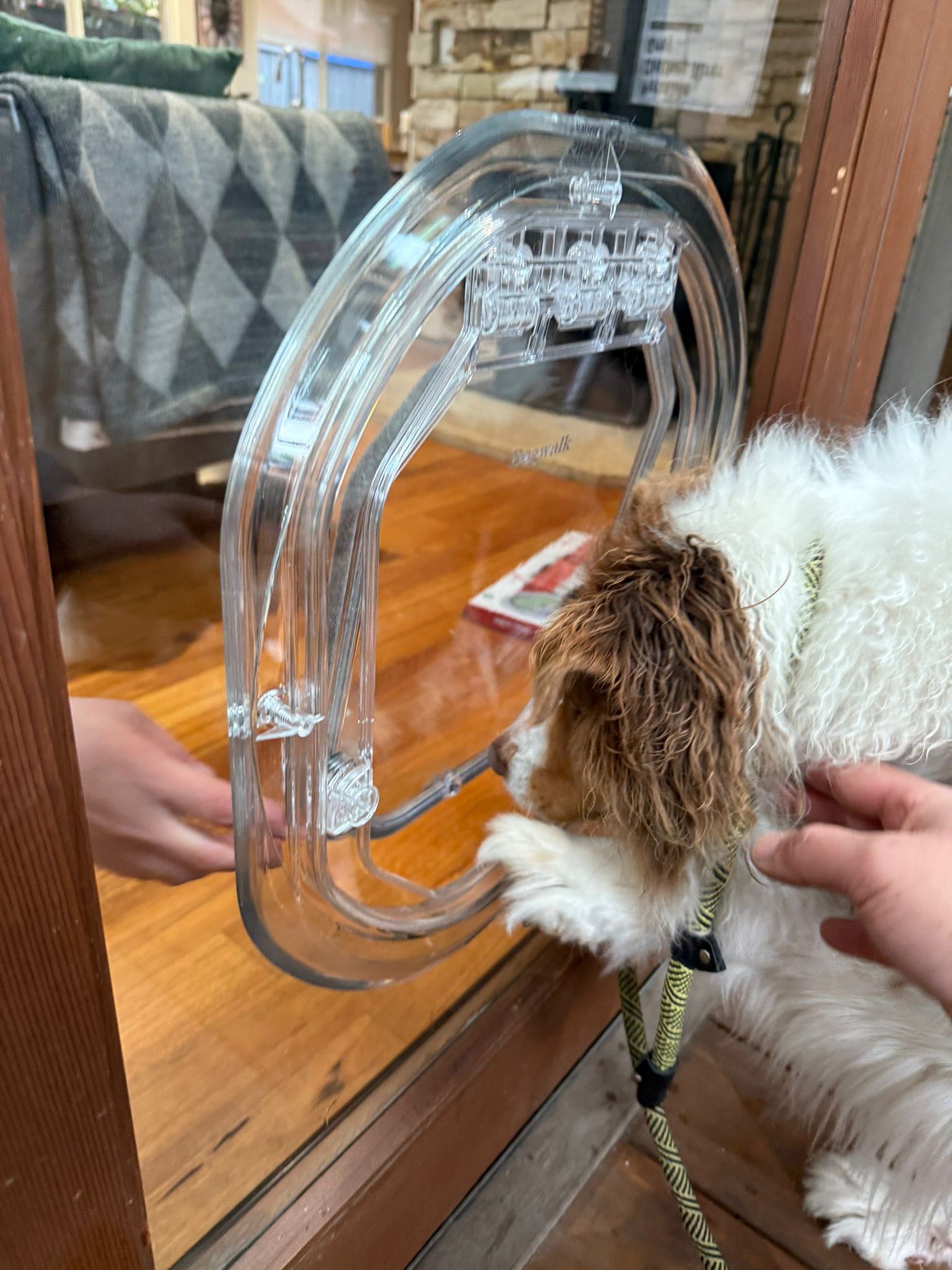
A dog door gives your pet the freedom to come and go as they please: no waiting to be let out, no toileting accidents, no scratching at the door. But getting your dog to actually use it confidently takes a little training. This guide shares five practical tips to make the process smooth and positive, plus a step-by-step positive reinforcement method that works for dogs of all ages and breeds. Once you're ready to choose a door, use our interactive door finder to get the right size first time.
- Let your dog familiarise themselves with the door before installation; introducing it gradually prevents fear associations from the start.
- Short, positive training sessions with high-value treats work faster than long sessions. Consistency across every session is more important than duration.
- Most dogs learn to use a dog door within a few days. Nervous or older dogs may take longer; patience and never forcing them through is essential.
Why a Dog Door Makes a Real Difference
Dog doors are increasingly popular, and for good reason. A dog that can go outside independently to toilet is a happier, calmer dog. Owners report significant reductions in accidents inside the home, less anxiety-driven scratching at doors, and a more relaxed pet overall. According to the RSPCA UK, giving dogs the ability to access outside space freely is an important part of meeting their behavioural needs.
Pet-Tek's Dogwalk® range is designed for smooth, quiet operation, making the training process easier because the flap doesn't startle dogs with noise or resistance. Available in both glass fitting and wood fitting versions for all door and panel types.
5 Tips to Train Your Dog to Use a Dog Door
- Familiarisation: Before installing the door, let your dog smell it and explore it in their space. Dogs investigate new objects through scent first. A few hours of familiarity with the door before it goes in reduces fear associations significantly.
- Install when your dog isn't present: Any loud drilling or banging during installation can cause your dog to associate the door with fear. Keep them in another room or take them for a walk while the door is fitted.
- Positive reinforcement: Every time your dog interacts with or passes through the door, reward them immediately with a treat and praise. Dogs learn fastest when the reward follows the behaviour within 2–3 seconds. See the step-by-step method below.
- Timing: Start training sessions when your dog is calm: after a short walk or between meals, not when they're overexcited or hungry. Keep sessions to 5–10 minutes maximum so they stay enjoyable.
- Consistency and patience: Use the same method in every session. Some dogs learn in minutes; others, particularly older or more anxious dogs, may take several days. Never force your dog through the opening. Let them proceed at their own pace.
Step-by-Step: The Positive Reinforcement Method
This is the most reliable method for training any dog to use a pet door, regardless of age or breed:
- Decide which direction to start; most dogs find it easier to go out first, but follow your dog's lead.
- Stand on the opposite side of the door from your dog so they can see and hear you.
- Prop the flap open with tape or a clip, especially important for nervous dogs. The flap touching their back unexpectedly is the most common cause of hesitation.
- Place a high-value treat just inside the door opening: close enough to see but far enough that they must pass fully through to reach it.
- Call your dog in a happy, encouraging voice. Don't use a command; keep it relaxed and inviting.
- If your dog comes partway through, give verbal praise but hold the treat until they pass fully through.
- When they make it all the way through, let them get the treat immediately and give enthusiastic praise.
- Repeat 3–5 times, then end the session on a success.
- Once confident going one direction, repeat the process going the other way; this teaches them the flap works both ways.
- Once fully comfortable, begin gradually lowering the propped flap: hold it lightly at first, then let it rest on their back, until they push through confidently on their own.
Remember: Keep sessions short, positive and consistent. Never force your dog through; if they back away, lower your expectations for that session and try again tomorrow. Progress on their timeline, not yours.
Common Dog Door Training Problems
My dog is scared of the flap
Start with the flap held completely open and let your dog pass through freely for several sessions before introducing the flap. Gradually lower it over multiple sessions until they're comfortable with it touching their back.
My dog refuses to go through
Switch to a higher-value treat: something your dog rarely gets, like chicken or cheese. Never push or force them. Try moving closer to the door yourself and making it feel like a game rather than a task.
My dog only uses the door one way
Practise each direction as a separate training exercise. Stand on the side they need to come to, place the treat, and reward only when they pass fully through in that direction. Most dogs master the second direction faster than the first.
My puppy scratches at the door instead
Redirect calmly every time; don't react to the scratching, just guide them to the dog door and reward when they use it. Consistency across all household members is critical here. If one person lets them in through the main door, it undoes the training.
Recommended Dogwalk® Models
Pet-Tek's Dogwalk® range covers glass fitting and wood fitting models for small, medium and semi-large dogs. All models feature UV-stabilised polycarbonate flaps (the same material used in aircraft windows), brush seals and 4-way manual locking. Use our dog door size guide to find the right model for your dog.
Frequently Asked Questions
Find the right Dogwalk® model for your dog
Glass fitting or wood fitting, small breed to semi-large, Pet-Tek has a Dogwalk® model for every dog and every door type.
View the Dogwalk® Range →