Pet Door Size Guide — Find the Right Cat Door or Dog Door
Use our free 5-step interactive calculator to find the exact cat door or dog door for your pet and installation type. Pets duck their head and lift their legs as they go through, so the door only needs to be a little wider and taller than your pet’s body — and it must be fitted at the right height. The calculator checks all of that for you.
🐾 Find the Right Pet Door in 5 Steps
Tell us about your pet and installation — we’ll recommend the right model and the height to fit it at.
Cat door or dog door?
Select your unit then enter your pet’s weight. Weight is a guide only — the measurements in Step 3 decide the size.
What are you fitting the door into?
Select the thickness of your installation.
How to Measure Your Pet
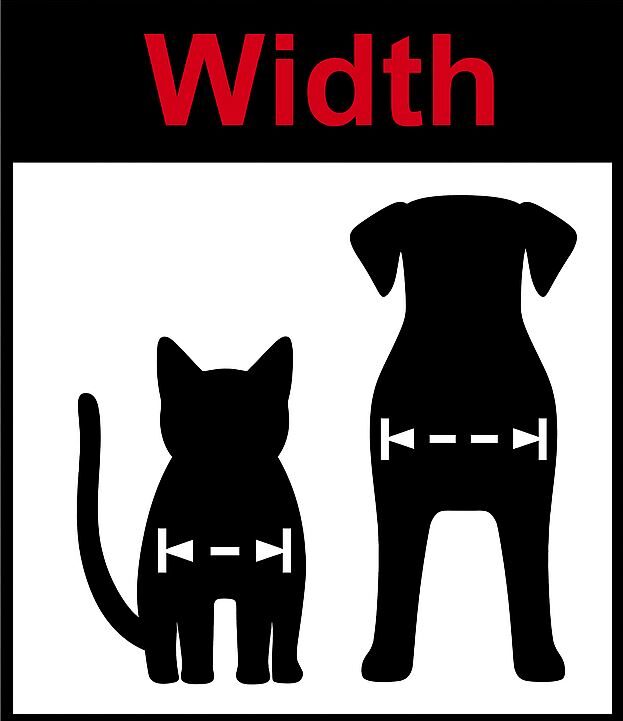
Width
The widest part of the body — usually the chest or the hips — with the fur pressed down. Add 25mm: the flap opening must be at least this wide.
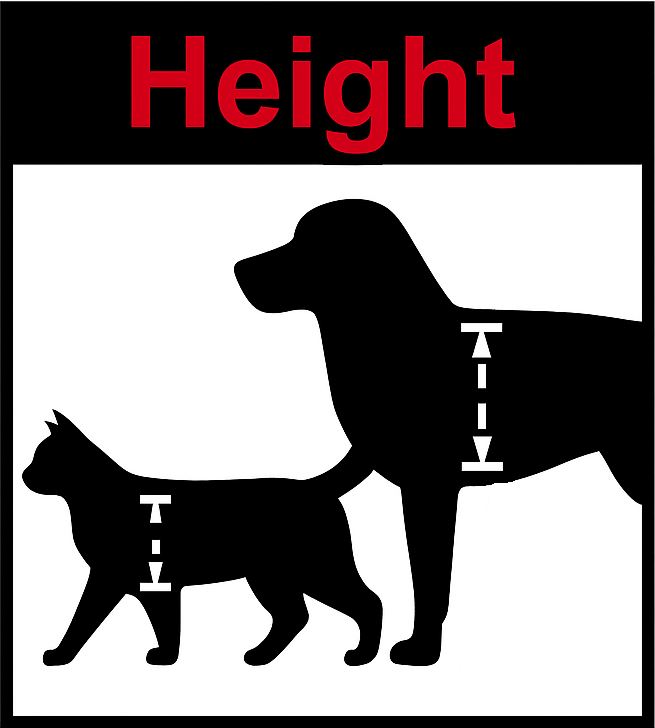
Body Depth
From the top of the shoulders straight down to the bottom of the chest. Add 25mm: the flap opening must be at least this tall.
Belly Height
Floor to the bottom of the belly. The bottom of the opening is cut level with the belly, never above it. Most cats: 100–150mm.
Shoulder Height
Floor to the top of the shoulders. The fitted opening must finish at least 25mm above this; each model has a typical maximum (table below).
Pet Door Size Guide — Cats & Dogs
| Pet | Typical Breeds | Glass Fitting | Wood / PVC / Metal / Wall |
|---|---|---|---|
| 🐱 Cat Doors (sized by weight) | |||
| Cat — up to 7kg | Kittens, average domestic cats, British Shorthair, Burmese | Catwalk® G-CD — 165 × 180mm | Catwalk® W-CD — 155 × 157mm |
| Cat — 7kg – 10kg | Maine Coon, Ragdoll, Norwegian Forest Cat | Catwalk® G-SDD Maxi — 187 × 190mm | Dogwalk® W-SDD — 180 × 227mm |
| Cat — 10kg+ | Very large cats — consider the dog door range | Contact Our Team | Contact Our Team |
| 🐶 Dog Doors (sized by shoulder height and body measurements) | |||
| Dog — shoulder height up to about 300mm | Chihuahua, Toy Poodle, Maltese, Yorkshire Terrier | Dogwalk® G-SDD Maxi — 187 × 190mm | Dogwalk® W-SDD — 180 × 227mm (up to about 360mm) |
| Dog — shoulder height up to about 380mm | Jack Russell, Cavalier King Charles, Pug, French Bulldog, Corgi, Miniature Schnauzer | Dogwalk® G-IDD Intermediate — 216 × 237mm | Dogwalk® W-DD Medium — 270 × 307mm (5–36mm panels) |
| Dog — shoulder height 450–500mm medium to semi-large dogs | Beagle, Border Collie, Spaniels, Blue Heeler, Staffordshire Bull Terrier, Kelpie | Dogwalk® G-DD Medium — 270 × 300mm | Dogwalk® W-DD Medium — 270 × 307mm (5–36mm panels) |
| Dog — shoulder height over 500mm | Labrador, Golden Retriever, German Shepherd, Boxer and larger — at or above the top of the range | Measure carefully or contact our team | Measure carefully or contact our team |
ℹ️ How the shoulder-height limits work: the bottom of the opening is fitted level with the belly and the top must finish at least 25mm above the shoulders. The Medium door’s 450–500mm limit is the figure printed on its packaging; the others follow the same rule. Width + 25mm and body depth + 25mm must also fit inside the usable opening — the calculator checks all of this with your own measurements. If your dog is within 30mm of a limit, or getting older, choose the next size up.
⚠️ W-DDW & W-DDB panels: These models suit door panels 5–36mm thick. A tunnel extension system for thicker panels is in development — contact our team to register your interest.
⚠️ Wall installations: A fabricated tunnel extension is required to span the wall thickness. Contact our team for tunnel specifications.
Choosing by Door, Panel or Wall Type
🪟 Glass, Sliding & Double Glazed Doors
Glass fitting requires a glazier to cut the hole before toughening. Our glass fitting range suits single glazing, double glazing, sliding glass doors, bifold doors and laminated glass panels up to 32mm thick.
🪓 Wood & Timber Doors
Our wood fitting range suits timber doors. Cat doors and small dog doors suit panels 11–52mm. The W-DDW and W-DDB Medium dog doors suit panels 5–36mm. A tunnel extension system for thicker panels is in development.
⬜ PVC, UPVC & Metal Doors
Our wood fitting range installs cleanly into PVC, UPVC and metal panels. Cat doors and small dog doors suit 11–52mm panels. The W-DDW and W-DDB Medium dog doors suit panels 5–36mm.
🧱 Wall Installations
Our wood fitting range can be installed through walls as well as doors. Because walls are significantly thicker than standard doors, a fabricated tunnel extension is required to bridge the gap.
Frequently Asked Questions — Pet Door Sizing & Installation
Still Not Sure? Our Team Can Help.
Tell us your pet’s weight, breed, measurements and door or wall type — we’ll recommend the right model and tunnel specifications if needed.