Cat door vs dog door — what's the difference?
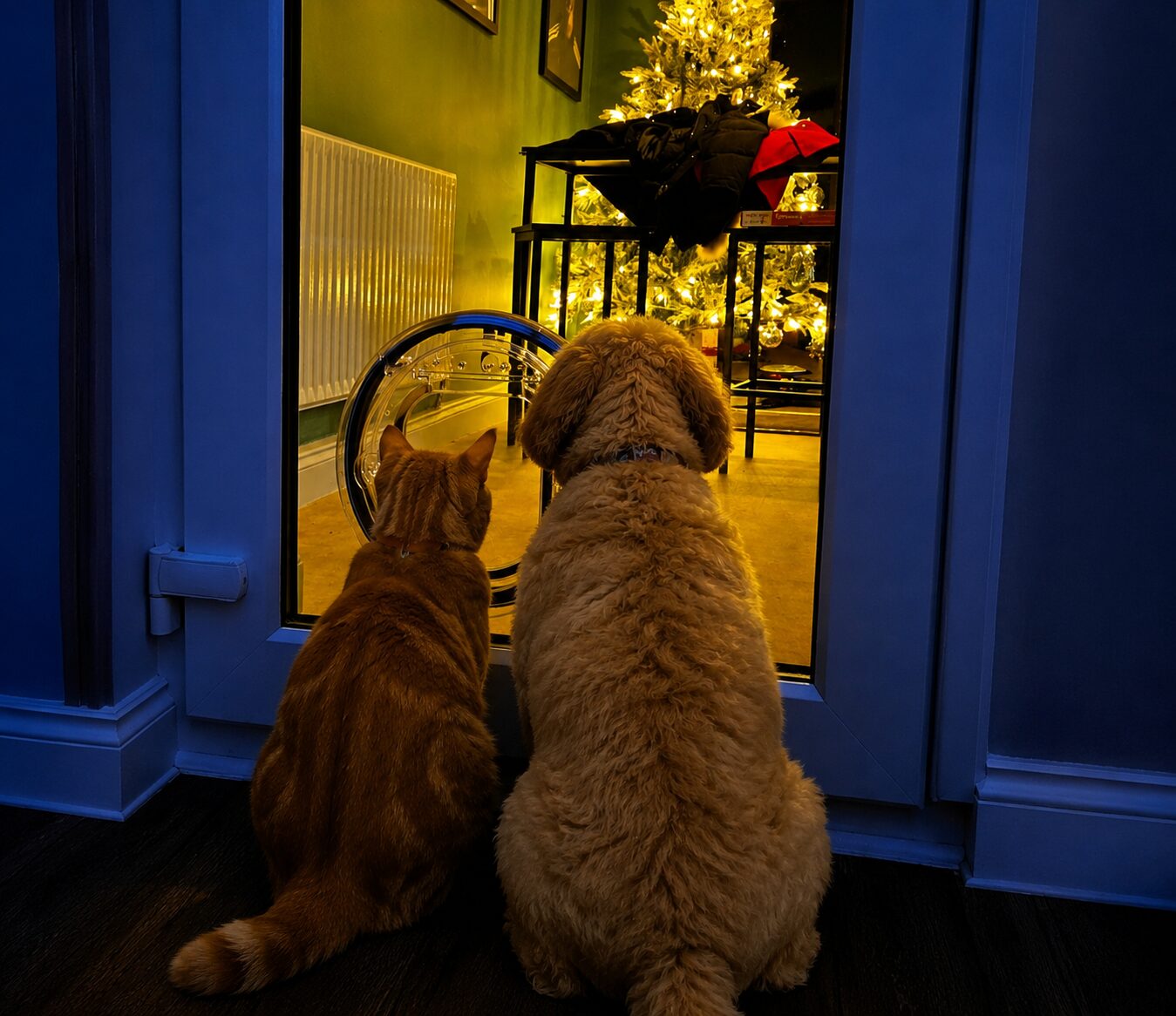
Not sure whether you need a cat door or a dog door? The difference goes beyond size. Cat doors and dog doors vary in flap strength, locking systems, frame construction and installation method. This guide explains everything, so you choose the right Pet-Tek door for your pet, your home and your installation type across New Zealand, Australia and the UK.
- Cat doors are sized for cats: lighter flap, smaller opening. Dog doors are larger and heavier duty, sized from small breeds up to medium and semi-large dogs.
- Both Catwalk® and Dogwalk® are available in glass fitting and wood fitting versions (wall installation via a lined tunnel), including double glazing and ranch sliders.
- Every Pet-Tek door includes a 4-way manual locking dial and full brush weather seal on all four sides, no batteries required.
What is the difference between a cat door and a dog door?
A cat door and a dog door are both pet doors: small openings fitted into glass, timber or a wall that let your pet come and go independently. The key differences come down to flap size, flap strength, frame construction and locking mechanism. Cat doors (also called cat flaps in the UK) are sized for cats and small animals. Dog doors and dog flaps are built larger and heavier, in sizes from small breeds up to medium and semi-large dogs such as Beagles, Border Collies, Spaniels and Blue Heelers.
Both the Catwalk® cat door range and the Dogwalk® dog door range from Pet-Tek International use the same 4-way locking dial system and full brush seal. If you need to install your door into a glass panel, ranch slider or patio door, read our complete guide to the best glass fitting cat flaps and dog flaps for model specs and glazier instructions. For a full overview of choosing the right cat flap, see our cat flap advice guide.
- Designed for cats and small animals
- Lightweight polycarbonate flap
- 4-way manual locking dial
- Full brush seal on all 4 sides
- Glass fitting or wood fitting (wall via lined tunnel)
- Fits ranch sliders and double glazing
- Round frame (glass) or rectangular (wood)
- Multi-magnetic option available
- Designed for small to medium and semi-large dogs
- Heavy-duty polycarbonate flap
- 4-way manual locking dial
- Full brush seal on all 4 sides
- Glass fitting or wood fitting (wall via lined tunnel)
- Fits ranch sliders and double glazing
- Round cut-out (glass) or rectangular (wood), larger opening
- Additional security clips included
Cat door vs dog door — quick comparison table
| Feature | Catwalk® cat door / cat flap | Dogwalk® dog door / dog flap |
|---|---|---|
| Designed for | Cats & small animals | Small to medium and semi-large dogs |
| Flap material | UV-stable polycarbonate | Heavy-duty polycarbonate |
| 4-way locking dial | ✔ Yes | ✔ Yes |
| Full brush weather seal | ✔ All 4 sides | ✔ All 4 sides |
| Glass fitting | ✔ Yes | ✔ Yes |
| Wood fitting | ✔ Yes | ✔ Yes |
| Wall installation | ✔ Via lined tunnel | ✔ Via lined tunnel |
| Ranch slider / patio door compatible | ✔ Yes | ✔ Yes |
| Double glazing compatible | ✔ Yes | ✔ Yes |
| Multi-magnetic option | ✔ Available | ✘ Cat only |
| Security clips | ✘ No | ✔ Included |
Can a cat use a dog door?
Yes: a cat can physically use a dog door if the flap is light enough to push open. However, a dog door opening is larger than a cat needs, meaning more draughts, more heat loss and a bigger gap for other animals to enter. A correctly sized Catwalk® cat door is always the better choice for a cat: easier to push, better insulated and more secure.
If keeping neighbourhood cats or other animals out is a concern, the multi-magnetic cat door from Pet-Tek allows only your cat through using a collar magnet, no batteries required.
How do I know what size pet door my dog needs?
Size your dog door by your dog's widest point and body depth: not their body length or shoulder height alone. Add 25mm to each and that is the minimum usable opening width and height. Then check the position: the top of the opening should sit at least 25mm above the shoulder and the bottom about level with the belly.
Quick measuring rule: Widest point + 25mm = minimum opening width. Body depth (top of the back to the bottom of the chest) + 25mm = minimum opening height. Shoulder height + 25mm = where the top of the opening should sit. Labradors and larger breeds: measure first. Use our 5-step door finder for an instant recommendation based on your dog's size and glass type.
Glass fitting, wood fitting or wall installation?
Both Catwalk® cat doors and Dogwalk® dog doors are available in three installation types:
Glass fitting cat flap or dog flap
The most common installation in New Zealand, Australian and UK homes. Designed for single glazing, double glazing, ranch sliders and UPVC patio doors. A glazier cuts a round hole, and the door slots in and locks with two screws. Models available for glass thicknesses from 3mm to 32mm. See the full glass fitting cat door range and glass fitting dog door range. For a buyer's guide comparing all glass fitting models, see our best glass fitting cat doors and dog doors guide.
Wood fitting cat door or dog door
For timber, PVC and aluminium-framed doors with a solid infill. A rectangular hole is cut using the supplied template. Available in slimline and tunnel versions for door thicknesses from 5mm to 52mm, depending on model. Can be DIY-installed with basic tools.
Wall installation cat door or dog door
For brick, weatherboard and cavity walls. A lined tunnel is built through the wall to bridge its thickness and the wood fitting door fits to it. Typically fitted by a builder or handyman for a clean, weatherproof result; contact us with your wall thickness for advice.
What is a 4-way locking pet door and why does it matter?
Every Pet-Tek Catwalk® cat flap and Dogwalk® dog flap features a 4-way manual locking dial: operated from inside the home with a simple quarter-turn. No batteries, no app, no tools required:
| Lock position | What it does | When to use it |
|---|---|---|
| In / Out | Pet enters and exits freely | Normal everyday use |
| In only | Pet can come inside but cannot go out | Evenings: keep pet safe at night |
| Out only | Pet can go out but cannot re-enter | Cleaning, guests, short trips |
| Locked | Door fully sealed, no movement | Travel, storms, full security |
What is a brush seal on a pet door and does it really work?
A brush seal is a dense strip of bristles running around the inside edge of the pet door flap frame. It closes the gap between the flap and frame, blocking draughts, wind, rain, insects and cold air. Every Pet-Tek Catwalk® cat flap and Dogwalk® dog flap includes a full brush seal on all four sides as standard. It works because of what sits under it: the flap-to-body gap on a Pet-Tek door is machined to next to zero tolerance, so the brush is sealing a hairline, not papering over a draughty gap.
Are cat flaps and cat doors the same thing?
Yes: cat flap, cat door, cat flap door and kitty door all refer to the same product. In New Zealand and Australia the term cat door is most common. In the UK, cat flap is the standard term. Pet-Tek uses both; they refer to the same Catwalk® range of glass fitting and wood fitting pet doors.
Not sure which Pet-Tek door fits your pet and home?
Use the free 5-step door finder: choose cat or dog, enter your pet's measurements, select your installation type and get your recommendation instantly.
Find the right door for your pet →