Keep Your Home Warm with a Pet Door — How Pet-Tek Engineers Out the Draft
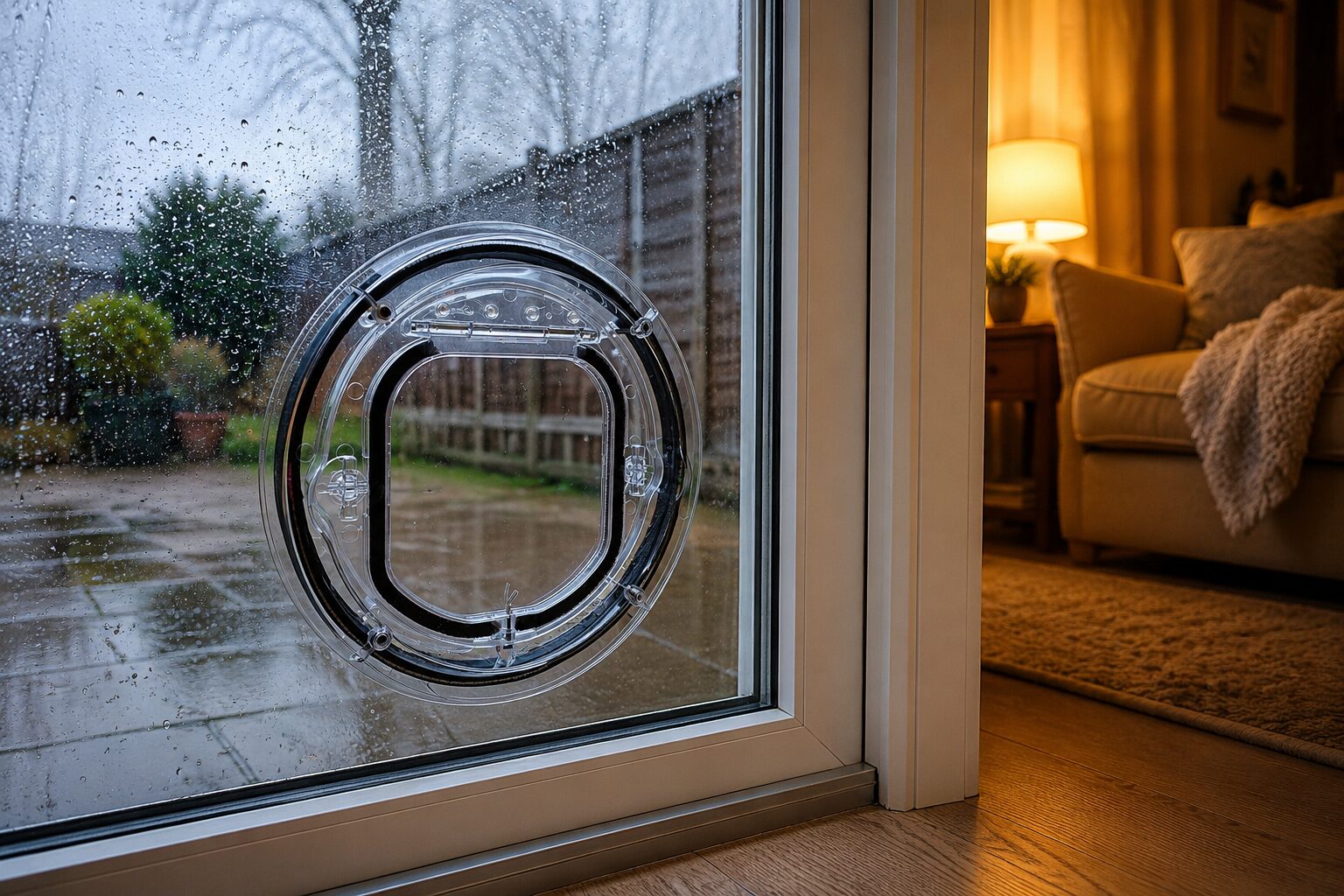
The most common concern we hear from pet owners considering a cat door or dog door is this: "Won't it let in drafts and make my home cold?" It's a fair question, and the honest answer is that a poorly designed pet door will. But a well-engineered one won't. This guide explains exactly how Pet-Tek builds a draft-proof pet door, why our thermal performance is among the best in the world, and what makes our doors different from the cheap alternatives flooding the market. For a full overview of choosing the right cat door, see our cat flap advice guide.
No — a well-engineered pet door will not make your home cold. Pet-Tek's Catwalk® and Dogwalk® doors seal against drafts with brush seals on all four sides of the flap, a magnetic closure that pulls the flap shut after every use, and a precision-moulded airtight housing. Choose the smallest door your pet can comfortably use, use the full lock position in winter, and heat loss stays minimal year-round.
- Pet-Tek's UV-stabilised polycarbonate flap (the same material used in aircraft windows) is rigid and dimensionally stable. It holds its shape and holds its seal, unlike thin plastic alternatives that warp within months.
- Dense brush seals on all four sides of the flap opening trap air and prevent drafts even while the flap is in motion, and eliminate rattling noise.
- The 4-way manual lock lets you seal the flap completely shut on winter nights or during storms, maximising your home's thermal performance.
The Draft Problem — and Why Most Pet Doors Fail
Most imported pet doors are designed to a price point, not a performance standard. The flap is too thin, the seal is too loose, and the housing fits poorly against the glass or door panel. The result is a permanent gap in your home's thermal envelope: cold air in winter, hot air in summer, and a heating bill that never quite makes sense.
This was precisely the problem that led Pet-Tek founder Steven King to design his own range from scratch in Auckland in 1999. Having distributed other brands for years and dealt with constant warranty claims for rattling, drafty, broken flaps, he set out to build a pet door that genuinely sealed, and genuinely lasted. The Smarter Homes draught-stopping guide (the NZ Government’s home performance resource) rates draught-stopping among the highest-impact ways to cut heat loss in NZ homes, which makes a properly sealed pet door a meaningful energy efficiency upgrade.
How Pet-Tek Engineers a Draft-Proof Pet Door
Every element of a Pet-Tek cat door or dog door is designed with thermal performance in mind. Here's how each component contributes:
UV-Stabilised Polycarbonate Flap
The flap is manufactured from UV-stabilised polycarbonate, the same material used in aircraft windows. It is rigid, dimensionally stable, and does not warp, bow or gap over time the way thin plastic flaps do. A flap that holds its shape holds its seal.
Brush Seals on All Four Sides
The flap opening is lined with dense brush seals on all four sides. These seals trap air at the opening, preventing cold drafts from passing through even when the flap is moving. They also significantly reduce noise; no rattling in the wind. The gap between the flap and the body is machined to next to zero tolerance, close enough that the flap swings freely with no visible daylight around its edge, and the brush seal closes what little remains.
Magnetic Flap Closure
A magnetic closure system pulls the flap firmly shut after each use. Unlike gravity-only flaps that sit slightly ajar in wind, the magnetic closure ensures the flap seats fully against the brush seals every single time, maintaining the thermal barrier consistently.
Precision Moulded Housing
Pet-Tek engaged specialist mould designers who built proper draft angles into every housing component. This means the housing fits flush and tight against the glass or door surface with no gaps at the perimeter: the first and most important line of defence against drafts.
The Mould Design Difference
Most people never think about mould design when buying a pet door. But it matters enormously. Pet-Tek invested in hiring the best mould designers in the industry: specialists who understand that proper draft angles, tight tolerances, and dimensional consistency are not optional extras. They are the difference between a pet door that seals and one that doesn't.
Proper draft angles ensure that every component releases cleanly from the mould with no distortion or warping. This means every Pet-Tek door that leaves our Auckland facility is dimensionally identical to the design specification. Not slightly bowed, not slightly twisted, not slightly out of tolerance. That precision is what makes the seal work, and what makes it keep working years down the track.
There is a second job those draft angles do that almost nobody notices. They are set so that any rain driven into the door body drains straight back out rather than pooling inside the frame. A pet door that holds water eventually grows mould, swells the timber around the cut-out and corrodes its screws, so we shaped ours to leave water nowhere to sit.
Cheaper imported alternatives cut corners on moulding. The result is components that look similar on the shelf but fit poorly in practice, with performance that degrades rapidly as the plastic warps under UV and temperature cycling. This applies whether you're looking at glass fitting cat doors or wood fitting cat doors; the same precision manufacturing standard applies across the entire range.
The Pet-Tek difference: We didn't just design a pet door. We invested in the tooling, the materials, and the manufacturing expertise to make it right. That investment shows up every winter when your home stays warm and your pet door stays silent.
The 4-Way Manual Lock — Your Winter Weapon
Every Pet-Tek cat door and dog door includes a 4-way manual locking system. This is particularly valuable in winter or when you are away from home for extended periods. The four lock positions are:
| Lock Position | What It Does | Best Used When |
|---|---|---|
| Open both ways | Pet can enter and exit freely | Normal daily use |
| In only | Pet can enter but not exit | Keeping pet inside at night |
| Out only | Pet can exit but not re-enter | Keeping pet outside temporarily |
| Fully locked | Flap locked shut in both directions | Winter nights, holidays, storms |
When fully locked, the flap is held firmly against the brush seals by both the magnetic closure and the mechanical lock, creating the tightest possible seal and maximum thermal performance. If you also need to stop neighbourhood cats entering, consider the multi-magnetic cat door, which adds selective entry without sacrificing any of the thermal properties above.
UV Resistance — Built for Australasian and UK Conditions
Thermal performance isn't just about winter drafts. In New Zealand, Australia and the UK, UV degradation is a major factor in pet door failure. Cheap plastic flaps yellow, cloud, and become brittle within 12–18 months of sun exposure, and a warped, degraded flap cannot seal properly no matter how good the original design was.
That is why we mould our flaps in UV-stabilised polycarbonate rather than commodity acrylic. The stabilising package in the resin is there to survive direct Australasian sun: the flap keeps its clarity, its dimensions and its seal year after year, without yellowing, clouding or warping.
Comparing Pet-Tek to Cheaper Alternatives
| Performance Factor | Pet-Tek | Cheap Imported Brand |
|---|---|---|
| Flap material | UV-stabilised polycarbonate | Thin flexible plastic |
| Draft sealing | 4-side brush seals + magnetic closure | No seals or minimal weather strip |
| Housing fit | Precision moulded — flush fit, no gaps | Poor tolerances — gaps at perimeter |
| UV resistance | UV-stabilised — retains performance | Yellows and warps within 1–2 years |
| Locking | 4-way manual lock | Basic 2-way or none |
| Noise | Silent — brush seals dampen movement | Rattles in wind |
| Long-term seal | Maintained — dimensionally stable | Degrades rapidly with UV and heat |
Tips for Maximising Thermal Performance
- Use the full lock in winter: when your pet is inside for the night, lock the flap fully shut for maximum insulation.
- Choose the right size: don't oversize the door. A flap opening that's larger than your pet needs reduces thermal performance unnecessarily. Use our size guide to get the right fit.
- Install at the correct height: correct positioning minimises the opening's exposure to prevailing wind.
- Consider the dual glaze models for double glazed installations; these are specifically engineered for double glazed units and provide the best thermal performance in glass fitting applications.
- Keep the brush seals clean: a quick brush to remove pet hair and debris from the seals twice a year maintains their effectiveness.
Frequently Asked Questions
Find the right pet door for your home
Use our interactive size guide to find the perfect Catwalk® or Dogwalk® model for your pet and your door type, and keep your home warm all year round.
Find My Pet Door →