How to Measure Your Pet for a Pet Door — Get It Right First Time
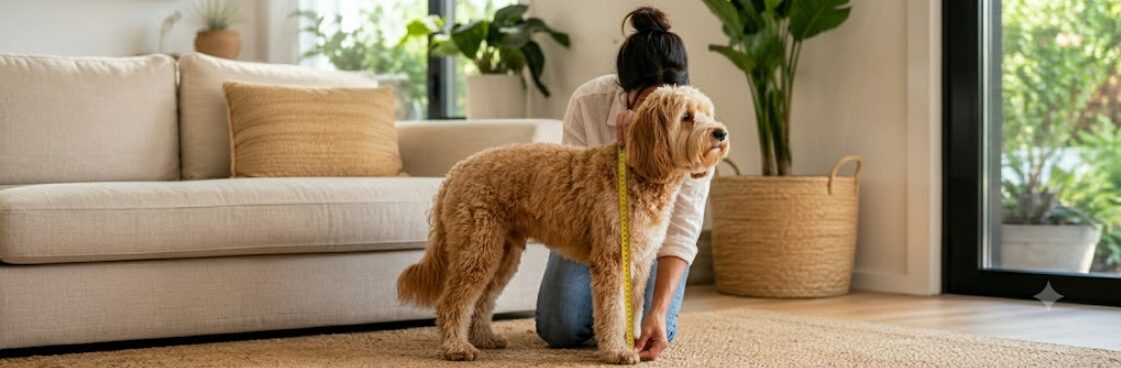
Pets don't walk through a pet door standing tall — they lower their head and lift their legs. So the door doesn't need to be as tall as your pet; it needs to be a little wider and a little taller than your pet's body, and it needs to be fitted at the right height. This guide shows the four measurements to take and exactly how to use them. Once you have them, our interactive door finder gives you a model recommendation in under a minute.
- Width: widest part of the body + 25mm = minimum flap opening width.
- Body depth: top of the shoulders to the bottom of the chest + 25mm = minimum flap opening height.
- Belly height: floor to the bottom of the belly = where the bottom of the opening is cut.
- Shoulder height: floor to the top of the shoulders — the top of the fitted opening must sit at least 25mm above it. Each model has a maximum shoulder height (table below).
How do you measure a pet for a pet door? With your pet standing on all four legs, measure the widest part of the body, the depth from the top of the shoulders to the bottom of the chest, the height from the floor to the belly, and the height from the floor to the top of the shoulders. Add 25mm to width and depth and choose a door whose flap opening is at least that wide and that tall. Fit the door with the bottom of the opening level with your pet's belly, so the top of the opening sits at least 25mm above the shoulders.
Why Getting the Size Right Matters
A pet door that's the wrong size creates real problems. If the opening is too narrow or too short, your pet will hesitate, struggle, or simply refuse to use it — especially cats, who are particularly sensitive to feeling restricted. If it's too large, you're letting in cold air, wind, and potentially unwanted visitors. And a door fitted too high off the floor becomes a hurdle that older dogs stop using.
The good news is that measuring correctly takes less than five minutes and needs nothing more than a soft tape measure. Do it once, do it properly, and your pet door will work perfectly for years. For a broader overview of choosing the right door, see our cat flap advice guide.
The Four Measurements You Need
Take all four with your pet standing naturally on all four legs on a flat floor, and write them down in millimetres. Two of them decide which door you buy; the other two decide how high it is fitted.
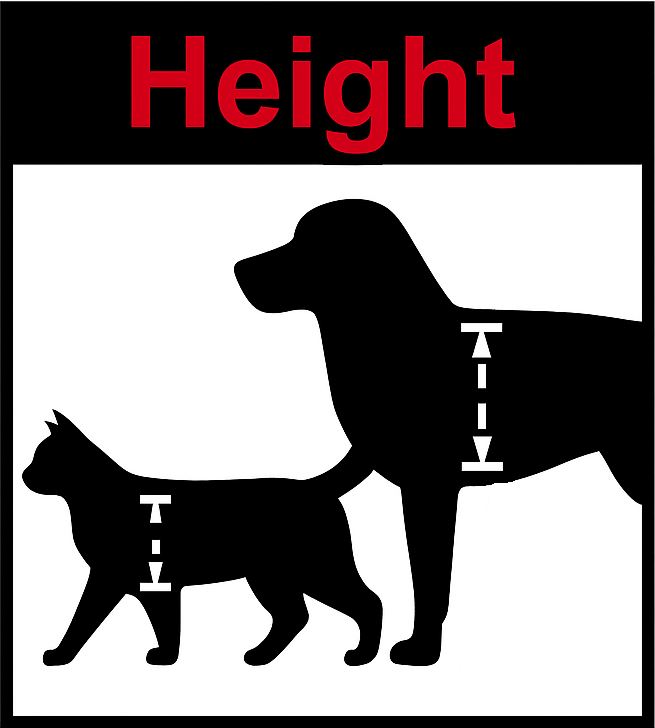
Shoulder height: floor to the top of the shoulders
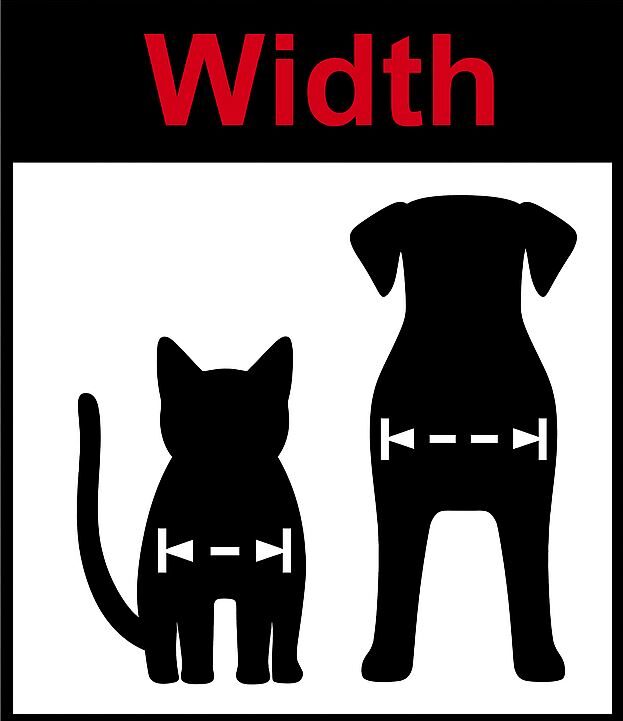
Width: widest point of the chest or hips
The rule in one sentence: the bottom of the opening should be level with your pet's stomach, and the top of the opening should be at least 25mm higher than the highest part of your pet's back. Because pets duck and step through, the flap only has to be taller than the body, not the whole animal.
Pro tip: Always measure your pet standing up, not lying down or sitting. If your pet is still growing, measure at the expected adult size or size up to the next model. For an older dog, choose a size up so the door can be fitted lower with less to step over.
What About Weight?
Weight is a useful starting point, particularly for cats, and our interactive size calculator uses it to shortlist a model. For dogs, though, weight alone is not enough — two dogs of the same weight can differ by 100mm at the shoulder, and it is shoulder height and body depth that decide whether a door works. Always confirm with the four measurements before you buy.
Measuring for Cats vs Dogs
Measuring for Cats
- Measure width at the widest point of the chest and add 25mm
- Belly height is usually 100–150mm — cut the bottom of the opening there
- Cats jump easily; they don't need a low step-over
- Cats prefer snug openings; don't oversize
- Several cats? Size for the largest, fit for the smallest
Measuring for Dogs
- Measure width at the chest or hips, whichever is wider, and add 25mm
- Body depth + 25mm sets the flap height you need
- Bottom of the opening at belly height, never above it — lower is kinder to older dogs
- Check shoulder height against the model's maximum
- Several dogs? Size for the largest, fit for the smallest
How to Use Your Measurements to Choose a Door
Every product page lists the usable opening as width × height. Three checks, and a door passes or it doesn't:
- Width check: your pet's width + 25mm must fit inside the usable opening width.
- Height check: your pet's body depth + 25mm must fit inside the usable opening height.
- Shoulder check: your pet's shoulder height must be no more than the model's maximum shoulder height in the table below.
The 25mm you add is clearance for the pet; the precision on the other side is ours — each flap is machined into its body at next to zero tolerance and finished with a full brush seal, so a correctly sized door is generous to the animal and tight against the weather at the same time. The easiest way to run the checks is our interactive size guide, which recommends the right model from the Catwalk® or Dogwalk® range.
Use our free interactive size calculator to find the perfect pet door for your cat or dog in under 60 seconds. Find My Pet Door →
Measuring the Installation Location
As well as measuring your pet, confirm that your chosen installation location can take the door, and that it can be fitted at the right height:
- Height from floor: the bottom of the opening goes level with your pet's belly — 100–150mm for most cats. Never above the belly; for an older dog, lower is better
- Glass thickness: Pet-Tek glass fitting cat doors suit 3mm to 28mm panels and Dogwalk® dual glaze dog doors suit glass up to 32mm
- Door panel thickness: wood fitting models suit 11mm to 52mm timber or PVC panels
- Clearance from frame: the cut-out centre should be at least 100mm from any frame edge
Quick Reference Size Guide
| Model | Usable Opening (W × H) | Max Shoulder Height | Typical Pets |
|---|---|---|---|
| Catwalk® original cat door (G-CD / W-CD) | 165 × 180mm | Cats — sized by weight | Cats up to about 7kg |
| Catwalk® maxi pet door (G-SDD / G-SDDSL) | 187 × 190mm | 300mm | Large cats 7–10kg; toy dogs — Chihuahua, Toy Poodle, Maltese |
| Dogwalk® wood fitting small dog door (W-SDD) | 180 × 227mm | 360mm | Small dogs — Jack Russell, Cavalier, Pug, French Bulldog |
| Dogwalk® intermediate dog door (G-IDD / G-IDDSL) | 216 × 237mm | 380mm | Small dogs — Jack Russell, Cavalier, Pug, French Bulldog, Corgi, Miniature Schnauzer |
| Dogwalk® medium dog door (G-DD / G-DDSL) | 270 × 300mm | 450–500mm | Medium to semi-large dogs — Beagle, Border Collie, Spaniels, Blue Heeler, Staffy |
| Dogwalk® wood fitting medium dog door (W-DD) | 270 × 307mm | 450–500mm | Medium to semi-large dogs — Beagle, Border Collie, Spaniels, Blue Heeler, Staffy |
Usable opening is the clear opening with the flap swung out of the way — about 13mm less than the flap panel height, which sits in the hinge. Maximum shoulder height assumes the bottom of the opening is fitted level with the belly and finishes at least 25mm above the shoulders. Breeds are typical examples only — always check your own pet's four measurements: width + 25mm and body depth + 25mm must fit inside the usable opening. If your pet is within 30mm of a limit, or is getting older, choose the next size up. Dogs taller than 500mm at the shoulder — Labradors, Golden Retrievers, German Shepherds — sit at or above the top of the Dogwalk® range: measure carefully or contact us before ordering.
Frequently Asked Questions
Find the right door for your pet in 60 seconds
Use our free interactive size guide: enter your pet's measurements and door type and we'll recommend the right model from the Catwalk® and Dogwalk® range.
Find My Pet Door →