Dog Doors for Sliding Glass Doors & Ranch Sliders — What Actually Works
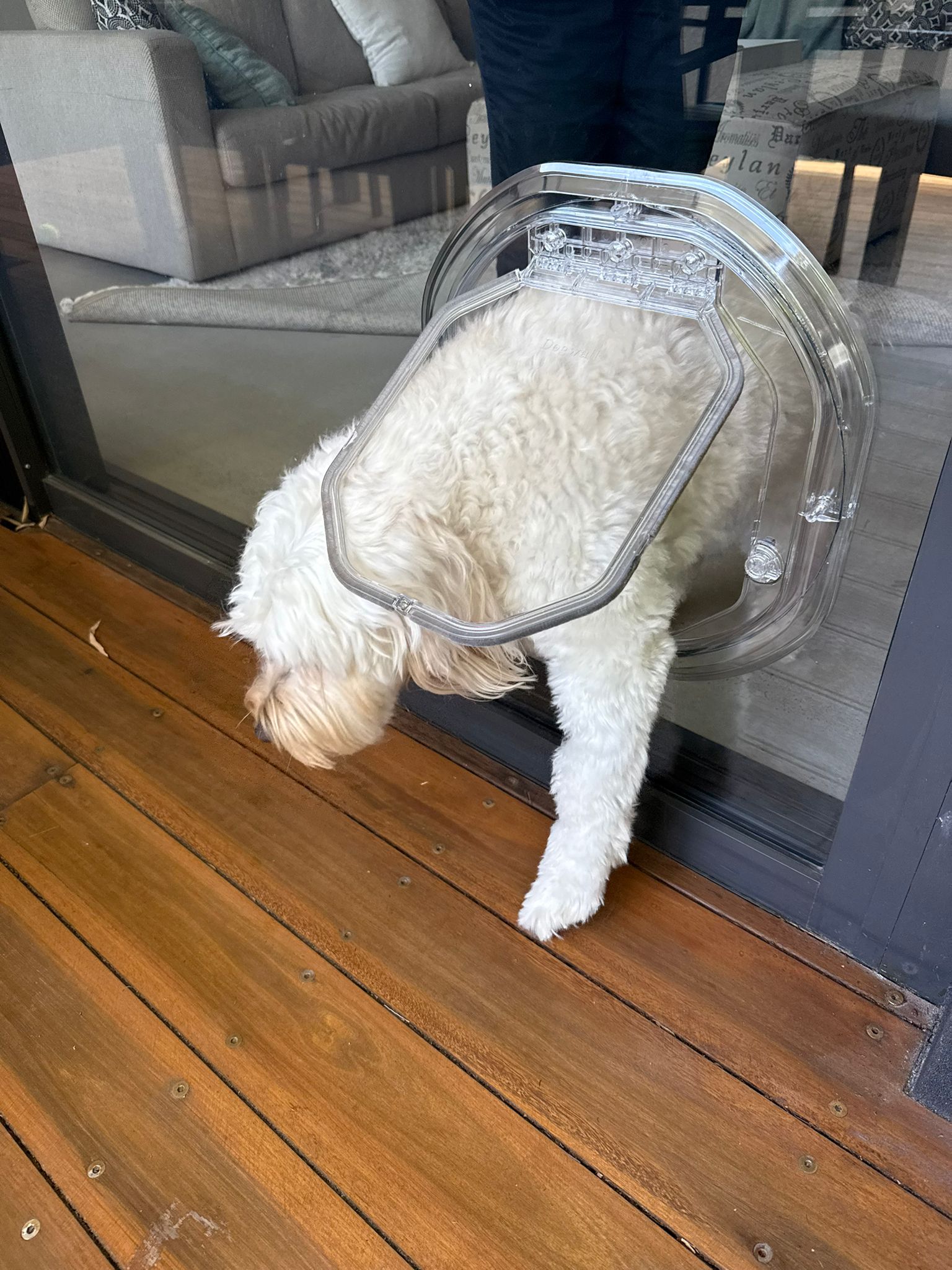
The ranch slider is the most common place New Zealanders want a dog door, and the place with the most confusion. Slider glass is almost always toughened, which cannot be cut, so the internet is full of workarounds: bulky panel inserts that block the slider, doors cut through adjacent walls, or giving up entirely. There's a much cleaner answer. This guide explains how a permanent glass fitting dog door goes into a ranch slider or sliding glass door, which Dogwalk® models suit it, and what to expect from the glazier.
- Slider glass is toughened and can't be drilled; the standard solution is a replacement glass panel with the round cut-out made before toughening. The slider itself is untouched.
- Unlike "sliding door insert" panels, a glass fitting dog door doesn't block the slider, doesn't compromise security, and looks factory-fitted.
- Dual glaze Dogwalk® models cover glass from 3–32mm: G-DDC/W/B Medium (medium to semi-large dogs, 270×300mm usable opening) and G-IDDC/W/B Intermediate (small to medium dogs, 216×237mm).
Why You Can't Just Cut a Hole in a Ranch Slider
Building codes require safety glass in doors, so slider panels are toughened (tempered). Toughening puts the whole panel under stress: drill it anywhere and the entire sheet shatters into granules. That's by design. It also means no glazier can cut a hole in your existing slider panel, no matter the tool.
The solution is simple and standard: a replacement panel. Your glazier measures the existing panel, orders an identical toughened panel with the round dog door cut-out made before toughening, then swaps the panels, usually in a single short visit once the panel arrives. Your original panel can be kept, which matters if you're renting (more on that in the FAQ). The full glass process is covered in our glass fitting guide.
Glass Fitting Door vs "Sliding Door Insert" Panels
Search "dog door for sliding door" and you'll find spring-loaded insert panels that sit in the slider track. They work, but know the trade-offs before buying one:
- Your slider no longer closes fully: the insert occupies part of the track, so the door closes against the insert, not the frame. Most rely on the insert's own latch or leave the main lock unusable without extra hardware.
- Permanent gap in insulation: two extra vertical seams that leak air, versus a flap sealed into the glass itself.
- Looks temporary: because it is.
A glass fitting dog door installed via replacement panel has none of these issues: the slider operates and locks exactly as before, the only change is a sealed round flap in the glass. That's why it's what glaziers recommend, and why the round cut-out format matters, as explained in why glaziers prefer round cut-out pet doors.
Which Dogwalk® Model for a Slider?
| Model | Dog Size | Usable Opening (W×H) | Glass Range | Cut-Out |
|---|---|---|---|---|
| G-DDC / G-DDW / G-DDB, Medium dual glaze | Medium to semi-large dogs (Beagle, Border Collie, Spaniel, Blue Heeler); Labradors and larger, measure first | 270×300mm | 3–32mm | 385mm |
| G-IDDC / G-IDDW / G-IDDB, Intermediate dual glaze | Small to medium dogs (Shih Tzu to Corgi size) | 216×237mm | 4–32mm | 320mm |
| Maxi pet doors (G-SDD range) | Toy breeds & cats | 187×190mm | 3–28mm | 267mm |
The dual glaze models are the slider picks because replacement slider panels are often double glazed or thicker toughened sheets; the 32mm capacity covers whatever your glazier specifies. Choose the size by measuring your dog: widest point and body depth (top of the back to the bottom of the chest) plus 25mm each gives the minimum usable opening, and the top of the opening should sit at least 25mm above the shoulder, per the measuring guide. Between sizes, go up. Clear (C) suits most sliders visually; white (W) and black (B) match joinery colours.
Most slider installs: G-DDC Medium dual glaze in clear: near-invisible in the glass, developed for medium to semi-large dogs such as Border Collies, Spaniels and Blue Heelers, and the 3–32mm range means the replacement panel spec is never a problem. Labradors and Retrievers sit at the top of that range: measure first (width + 25mm inside 270mm, body depth + 25mm inside 300mm) and contact us if it is close. Smaller dog: G-IDDC Intermediate, same logic one size down.
The Process, Start to Finish
- Buy the door first: the glazier needs the cut-out diameter (385mm or 320mm) and the fitting instructions that come with it.
- Glazier measures the slider panel and confirms glass spec for the replacement.
- Panel is manufactured with the round hole cut, then toughened. Allow your glazier's normal panel lead time.
- Swap visit: old panel out, new panel in, dog door fitted and sealed. The slider rolls and locks exactly as before.
- Training: most dogs are through confidently within a week using the training method here.
- Round cut-out size: 385mm (Medium) or 320mm (Intermediate)
- Panel spec: toughened replacement panel — single or double glazed, up to 32mm
- The fitting instructions from the box — glass range and clamping detail
The on-site swap and door fitting typically takes well under an hour.
Positioning in a Slider
- Fixed panel vs sliding panel: the fixed panel is the usual choice; the flap location never moves, and the sliding panel stays lighter. Fitting in the moving panel also works if the layout demands it; your glazier will advise.
- Height: bottom of the flap roughly level with your dog's belly: low enough to step through, not crawl. The glazier confirms edge clearances from the frame.
- Away from the latch edge so the flap never interferes with the slider's locking stile.
Frequently Asked Questions
Get the right door before you call the glazier
Enter your dog's measurements and your glass type, and the door finder returns the exact Dogwalk® model and cut-out size. A ranch slider cops the weather side-on, which is where the door body design pays off: the internal draft angles are shaped so rain driven into the frame drains straight out again instead of sitting there breeding mould and corroding fixings.
Find My Dog Door →