How to Fit a Cat Door in Glass — The Complete Glazier & Homeowner Guide
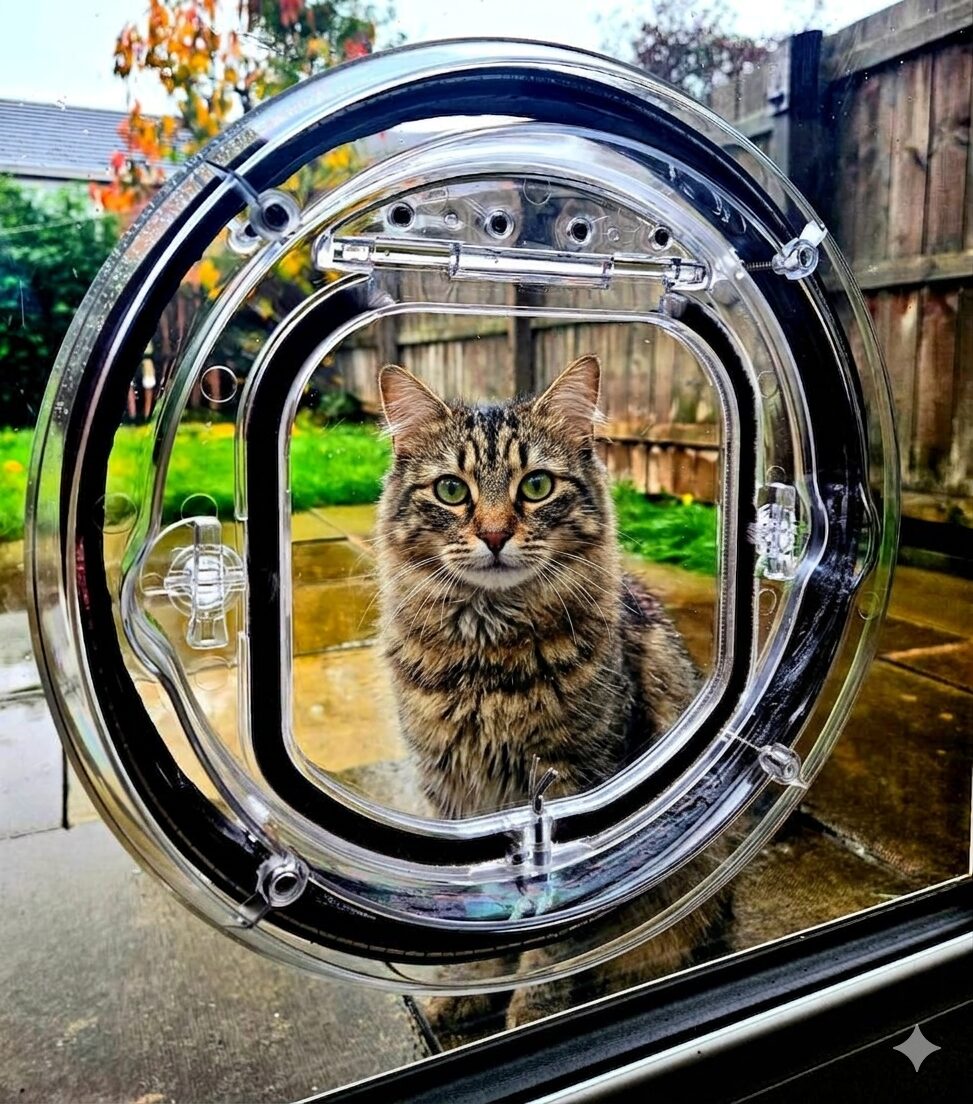
Fitting a cat door in glass is one of the cleanest, most professional-looking installations you can have: a round hole, a flush-fitting unit, and no visible framing. It is also the most misunderstood. This guide covers the complete process: what the glazier does, what you can do yourself, how toughened and double glazed glass changes the job, and exactly what cut-out size each Catwalk® model needs. For an overview of both glass and wood installation, see our cat door installation guide.
- A glazier cuts one round hole with a core drill, then fitting the Pet-Tek door unit itself takes minutes and can be done by the homeowner.
- Toughened glass cannot be cut after toughening; a replacement panel with the hole pre-cut is made instead. Your glazier organises this.
- Catwalk® glass fitting cat doors use a 245mm round cut-out (original and multi-magnetic) or 267mm (maxi models), and suit glass from 3mm to 28mm depending on the model.
Can You Fit a Cat Door in Glass?
Yes — glass panels are the most common cat door installation location in New Zealand and Australia, and the entire Catwalk® glass fitting range is purpose-built for it. Single glazing, double glazing, ranch sliders, patio doors, and fixed glass panels are all suitable. The one hard rule: cutting glass is a glazier's job. The hole must be drilled with specialist core drilling equipment; attempting it with DIY tools will crack or shatter the panel.
The good news is that the glazier's part is a single round hole. Everything after that (fitting the door unit, the retaining ring, and the seal) is straightforward and can be done by you. The Glass & Glazing Federation recommends a qualified glazier for all glass cutting work.
Before You Book a Glazier — 4 Things to Confirm
- Your glass type: single glazed, double glazed, laminated, or toughened. If you're not sure, your glazier can identify it on site. Toughened glass changes the process (see below).
- Your glass thickness: measure at an open edge or ask your glazier. Each Catwalk® model has a specific glass thickness range (see the model table below).
- Your model and its cut-out size: the glazier needs the exact cut-out diameter before drilling: 245mm for the original and multi-magnetic cat doors, 267mm for maxi models.
- Your cat's measurements: shoulder height and widest body width plus 25mm each. See the measuring guide or use the door finder.
Why the Round Cut-Out Matters
Most imported glass fitting pet doors require a rectangular cut-out. Rectangles are slow to cut in glass and every corner is a stress point where cracks can start, both during cutting and years later. Pet-Tek's entire glass fitting range uses a round cut-out: a single pass with a core drill, no corners, no stress fractures, and a faster, cheaper job for the glazier. It is the reason glaziers across NZ, Australia and the UK prefer fitting the Pet-Tek range. The precision continues past the cut-out: the flap is machined to sit in its body at next to zero tolerance with a full brush seal over the gap, which is why a freshly fitted glass panel with a Catwalk® in it reads barely different on a draught test to the plain panel it replaced.
The Installation — Step by Step
- Confirm the position: the bottom of the flap opening should sit roughly 10–15cm above floor level, about level with your cat's belly, and the cut-out needs clearance from the panel edges and frame. Your glazier will confirm both.
- Mark the cut-out: using the diameter for your model (245mm or 267mm), the glazier marks the centre point and circle on the glass.
- Core-drill the hole: a diamond core drill cuts the round hole in a single pass. On double glazing, both panes are drilled together.
- Dress the edges: the cut edge is smoothed and cleaned so the door unit seats flush.
- Fit the door unit: the Catwalk® unit inserts through the hole from the outside; the retaining ring secures it from the inside. This step is simple enough for the homeowner to do.
- Seal and test: a bead of silicone around the outer ring weatherproofs the installation. Test the flap swing and the 4-way lock, and the job is done.
An experienced glazier completes the whole job in under an hour. Full fitting instructions are included with every door and available on each product page as a PDF download.
- Round cut-out size: 245mm (original & multi-magnetic) or 267mm (maxi)
- Your glass type & thickness: single or double glazing, 3–28mm
- The fitting instructions from the box — glass range and clamping detail
Any qualified glazier can do this — most complete it in under an hour.
Toughened glass? Different path, same result. Toughened (tempered) glass cannot be cut after the toughening process; drilling it will shatter the panel. Instead, your glazier orders a replacement panel with the hole pre-cut before toughening, then swaps the panels. Ranch sliders and patio doors are almost always toughened, so this is the normal route for sliding door installations. See our full guide to cat flaps in double glazed glass for sealed-unit specifics.
Which Model, Which Cut-Out, Which Glass?
| Model | Cut-Out | Glass Thickness | Usable Opening (W×H) | Flap Panel (W×H) |
|---|---|---|---|---|
| G-CDC / G-CDW, original | 245mm dia | 3–10mm | 165×180mm | 165×193mm |
| G-MCDW, multi-magnetic selective entry | 245mm dia | 3–26mm | 155×157mm | 155×170mm |
| G-SDDSLC / G-SDDSLW, maxi slim line | 267mm dia | 3–21mm | 187×190mm | 187×203mm |
| G-SDDC / G-SDDW / G-SDDB, maxi dual glaze | 267mm dia | 3–28mm | 187×190mm | 187×203mm |
Single glazing? The original G-CDC or G-CDW is the fastest install. Double glazing? Choose the maxi dual glaze models for the widest glass range, or the G-MCDW if you also need to keep other cats out. For a full comparison of every model, see our best glass fitting cat and dog doors guide. Fitting a door for a dog instead? The Dogwalk® glass fitting range uses the same round cut-out process with larger diameters.
Finding a Glazier
Pet-Tek products are fitted by glaziers across New Zealand, Australia, the UK and 20+ countries; most glaziers know the range and its cut-out sizes well. When you call, tell them: the model you've purchased, the cut-out diameter, your glass type and thickness, and the position you want. If you need help finding a glazier familiar with Pet-Tek installations in your area, contact us.
Frequently Asked Questions
Ready to choose your glass fitting cat door?
Use the interactive door finder: enter your cat's size and your glass type and get the exact right Catwalk® model in under a minute.
Find My Cat Door →