Pet Doors in Toughened & Double Glazed Glass — Replacement Panels Explained
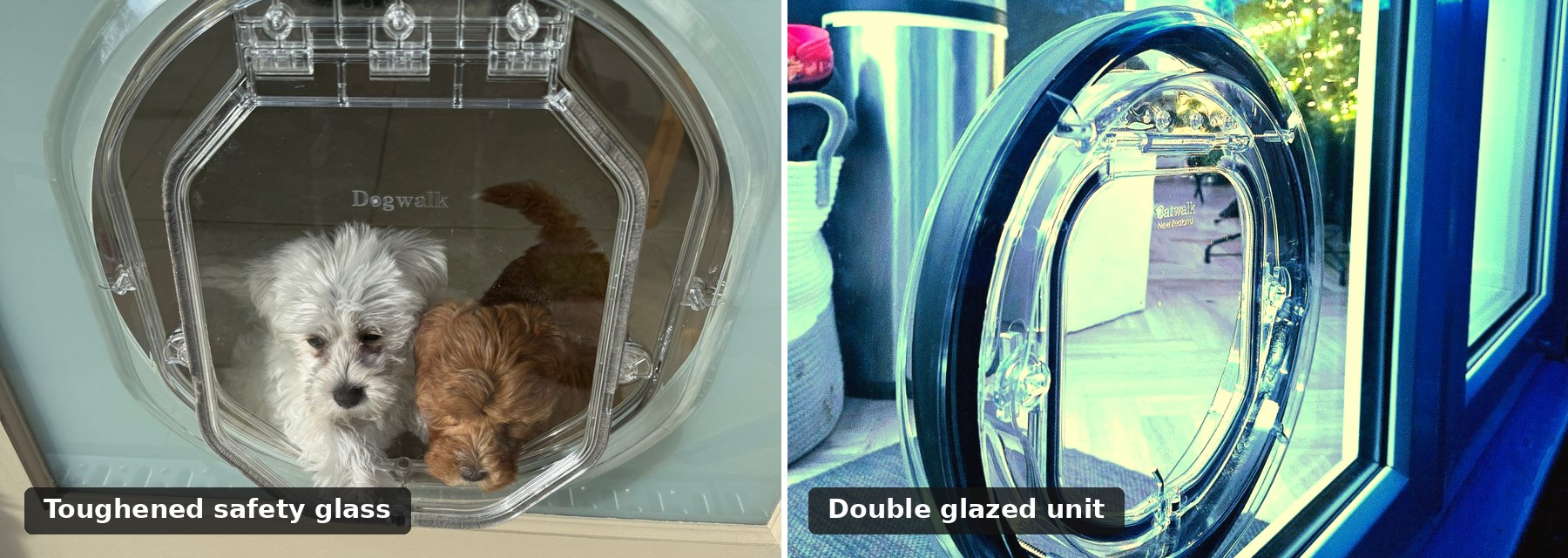
"Your glass is toughened, we can't cut it" is where a lot of plans for pet doors in toughened glass stall. It shouldn't. The replacement panel is the standard, everyday glazier solution, and it's how the majority of modern glass installations are done. This guide explains why toughened glass can't be cut, how to tell what glass you have, exactly how the replacement panel process works for both single and double glazing, and which Catwalk® and Dogwalk® models suit each glass type.
Yes — you can fit a pet door into toughened or double glazed glass. Toughened glass cannot be cut once it is made, so a glazier orders a new panel with the round hole cut before toughening and swaps it into your frame — your original glass comes out intact, which is ideal for renters. Sealed double glazed units are handled the same way, with the dual glaze door models sealing the cavity at the cut-out: up to 28mm for cat and maxi doors, and 32mm for dog doors.
- Toughened glass shatters if drilled; the hole must be cut before toughening, which is why a replacement panel is made rather than cutting your existing one.
- Double glazed sealed units take pet doors too: the dual glaze models suit units up to 32mm (dog doors) and 28mm (maxi pet doors).
- Look for the safety standard stamp in a corner of your glass: toughened panels are permanently marked. No stamp usually means annealed glass, which can often be cut in place.
Pet Doors in Toughened Glass: Why It Can't Be Cut
Toughened (tempered) glass is heated and rapidly cooled during manufacture, locking the whole sheet under permanent stress. That stress is what makes it several times stronger than ordinary glass, and what makes it shatter into small granules the instant it's cut, drilled or deeply scratched. It's a safety feature, not a limitation: doors and low glazing must use safety glass under building rules, so it breaks safely instead of into shards.
The consequence for pet doors is absolute: no glazier, no tool, no exception can cut a hole in an existing toughened panel. Any cutting has to happen before the toughening stage at the glass factory.
Which Glass Do You Have?
| Glass Type | How to Identify | Pet Door Route |
|---|---|---|
| Toughened (tempered) | Permanent standards stamp etched in a corner; standard in doors, sliders, low panels | Replacement panel with pre-cut hole |
| Annealed (ordinary float) | No stamp; older windows and fixed panels | Usually cut in place by core drill; glazier confirms suitability |
| Laminated | Stamp may say laminated; visible interlayer at the edge | Glazier assesses; some laminates can be cut, others are replaced |
| Double glazed unit (any of the above ×2) | Two panes with a spacer bar visible at the edge | Cut both panes in place if not toughened; otherwise replacement unit |
Unsure? Photograph the corner stamps (or their absence) and the edge of the glass; any glazier can identify the type from that, or on site in seconds.
The Replacement Panel Process
- Measure: the glazier measures your existing panel precisely: dimensions, thickness, and for sealed units the unit make-up.
- Manufacture: a new panel is cut to size with the round pet door hole (245mm/267mm cat doors, 320mm/385mm dog doors), then toughened. The hole travels through the toughening process, so the finished panel is full-strength safety glass with the opening already in it.
- Swap: old panel out, new panel in; a short visit. Your original panel survives intact, which is exactly why this method is perfect for renters.
- Fit the door: the Catwalk® or Dogwalk® unit clamps through the hole with its retaining ring and is sealed, the same simple fitting as any glass installation.
Double Glazing: How the Sealed Unit Works
A double glazed pet door installation puts the hole through both panes, with the door unit sealing the opening so the cavity stays weathertight. For non-toughened units this is core-drilled in place; for toughened units the replacement unit is manufactured with matching holes in both panes and resealed around the opening. Either way, the dual glaze door models are built for the job: Because a glass panel takes weather on its outside face, the door body earns its keep here: its internal draft angles are shaped so any rain driven into the frame drains straight back out rather than pooling inside, and the flap-to-body gap is machined to next to zero tolerance under a full brush seal.
| Model | For | Glass/Unit Range | Cut-Out |
|---|---|---|---|
| Maxi dual glaze pet doors (G-SDDC/W/B) | Cats & small dogs (up to ~300mm shoulder) | 3–28mm | 267mm |
| G-MCDW multi-magnetic | Cats, selective entry | 3–26mm | 245mm |
| Intermediate dual glaze dog doors (G-IDDC/W/B) | Small to medium dogs (up to ~380mm shoulder) | 4–32mm | 320mm |
| Medium dual glaze dog doors (G-DDC/W/B) | Medium to semi-large dogs (up to 450–500mm shoulder) | 3–32mm | 385mm |
Deeper coverage of sealed-unit specifics, including thermal performance, is in cat flaps & dog doors in double glazed glass and keeping your home warm with a pet door.
Time and Cost Expectations
- Time: the on-site swap-and-fit visit is typically under an hour. The lead time is in panel manufacture: made-to-order toughened panels take days to a couple of weeks depending on your glazier's supplier.
- Cost: panel price scales with size and specification (toughened costs more than annealed; sealed units more than single panes; low-E and special glass more again). The pet door and fitting labour are the smaller share. Get an itemised quote, and quote the exact cut-out size from your door's instructions so there's no re-work.
- Order of operations: buy the pet door first. The glazier needs the cut-out diameter and glass range before ordering the panel.
Frequently Asked Questions
Know your glass? Get the right door for it
Enter your pet's measurements and glass type, and the door finder returns the exact model and the cut-out size your glazier needs.
Find My Pet Door →