What Size Pet Door Does My Dog Need? The Breed-by-Breed Guide
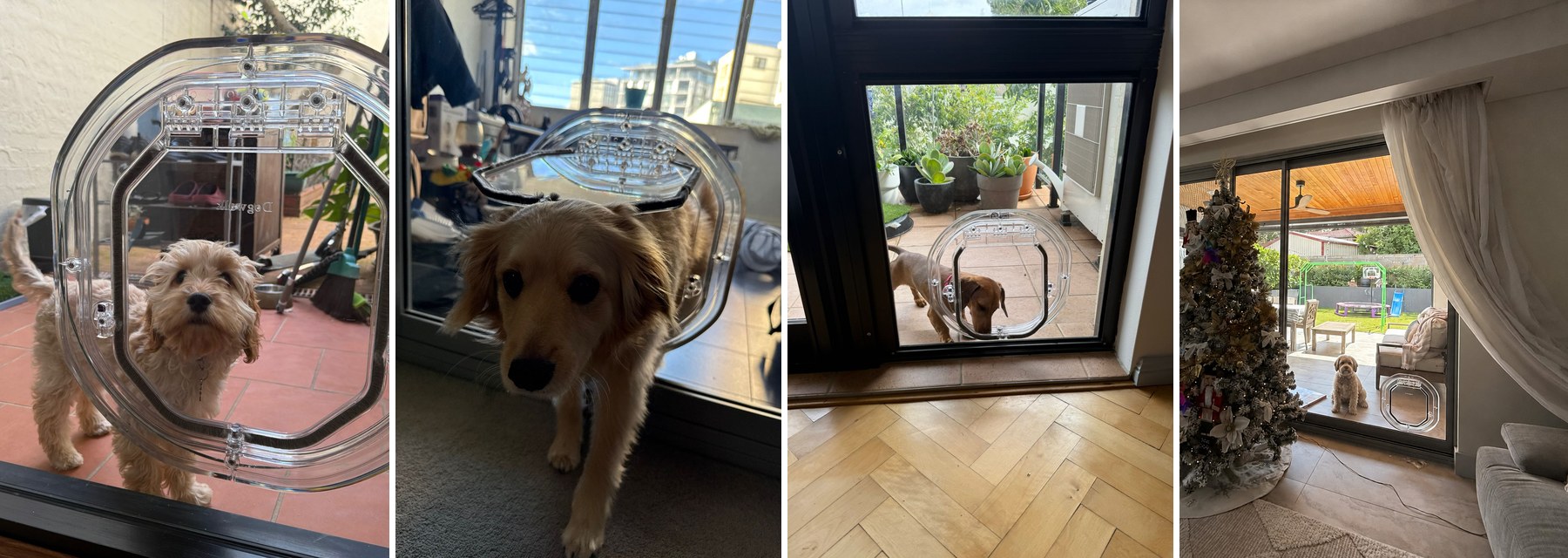
Buy a dog door one size too small and your dog will squeeze, hesitate, and eventually refuse to use it. Buy the right size and it disappears into daily life. Dogs duck their head and lift their legs as they go through, so the door doesn't need to be as tall as the dog — it needs to be a little wider and taller than the dog's body, and fitted at the right height. Because most owners shop by breed, this guide maps the popular breeds in New Zealand and Australia to the right Dogwalk® size. Measure your individual dog to confirm: breeds vary, and your dog is the one who has to fit.
- Four measurements decide everything: width and body depth (each plus 25mm) pick the opening; belly height and shoulder height decide how high it is fitted.
- Four sizes, usable openings width × height: Maxi 187×190mm (toy dogs), W-SDD 180×227mm (small, wood), Intermediate 216×237mm (small), and Medium 270×300mm glass / 270×307mm wood — developed for medium to semi-large dogs up to 450–500mm at the shoulder.
- Between sizes? Always go up, and for puppies, buy for the adult size of the breed.
How to Measure Your Dog
- Width: measure the widest point of your dog (usually across the shoulders or hips), fur pressed down, and add 25mm. This must fit inside the usable opening width.
- Body depth: measure from the top of the shoulders straight down to the bottom of the chest and add 25mm. This must fit inside the usable opening height. Dogs duck their heads going through, so the flap doesn't need to match their full standing height; the fitting height on the door does that job.
- Belly height: measure from the floor to the bottom of the belly. The bottom of the opening is cut level with the belly, never above it — lower is kinder to an older dog.
- Shoulder height: measure from the floor to the top of the shoulders. Fitted at belly height, the top of the opening must finish at least 25mm above this, which is why each size has a typical maximum shoulder height.
The tape-measure walkthrough with photos is in the full measuring guide, and the door finder runs all four checks for you.
Breed-by-Breed Size Chart
| Typical Breeds | Size & Usable Opening | Glass Fitting | Wood Fitting |
|---|---|---|---|
| Chihuahua, Yorkshire Terrier, Pomeranian, Maltese, Toy Poodle, Miniature Dachshund shoulder height up to about 300mm |
Maxi — 187×190mm | Maxi pet doors (G-SDD range) | W-SDD Small Dog Door (180×227mm) |
| Shih Tzu, Cavalier King Charles, Jack Russell, Bichon Frise, Pug, French Bulldog, Miniature Schnauzer, Corgi, Fox Terrier, Border Terrier shoulder height up to about 380mm |
Intermediate — 216×237mm (glass) / W-SDD 180×227mm (wood, up to about 360mm) | G-IDDC / G-IDDW / G-IDDB; slim line G-IDDSLC / G-IDDSLW | W-SDDW / W-SDDB, tunnel W-SDDTW / W-SDDTB; or W-DD by measurement |
| Beagle, Cocker Spaniel, Springer Spaniel, Border Collie, Blue Heeler, Kelpie, Staffordshire Bull Terrier, Whippet, Cavoodle medium to semi-large dogs, shoulder height 450–500mm |
Medium — 270×300mm glass / 270×307mm wood | G-DDC / G-DDW / G-DDB; slim line G-DDSLC / G-DDSLW | W-DDW / W-DDB |
| Labrador, Golden Retriever, German Shepherd, Boxer, Huntaway, Standard Poodle, Dalmatian, Vizsla shoulder height over 500mm |
At or above the top of the Medium range — measure first | Many of these dogs do use the Medium door: width + 25mm must fit inside 270mm and body depth + 25mm inside 300mm. Run the door finder with your dog's four measurements, or contact us. | |
The Rules That Prevent a Wrong Buy
- Between sizes: go up. A door slightly too big costs nothing in daily use; a door slightly too small gets abandoned by the dog.
- Puppies: buy the adult size. A Border Collie pup fits an intermediate door for a few months and then doesn't. Size for the breed's adult build from day one; puppies learn big flaps just as fast.
- Two dogs: size for the bigger one, fit for the smaller one. Small dogs use big flaps happily; the reverse doesn't work. Fit the bottom of the opening no higher than the smaller dog's belly. Same for cat + dog households: the cat will use the dog's door.
- Weight is a hint, not a measurement. A lean Whippet and a stocky Staffy can weigh the same and need different doors. The tape measure decides.
- Older or arthritic dogs: fit the door lower so the step-over is smaller, and go a size up for an easier pass-through.
Where the Door Goes Changes the Model, Not the Size
Once you know the size, the location picks the model line: glass panels and sliders take the glass fitting range (installed by a glazier via a round cut-out; see the slider guide and toughened glass guide), while timber, PVC and metal doors take the DIY wood fitting range. Full model-by-model specs are in the dog door buyer's guide.
Frequently Asked Questions
Skip the chart: get the exact model
Enter your dog's four measurements and your door or glass type. The door finder returns the right Dogwalk® model — and the height to fit it at — in under a minute.
Find My Dog Door →